



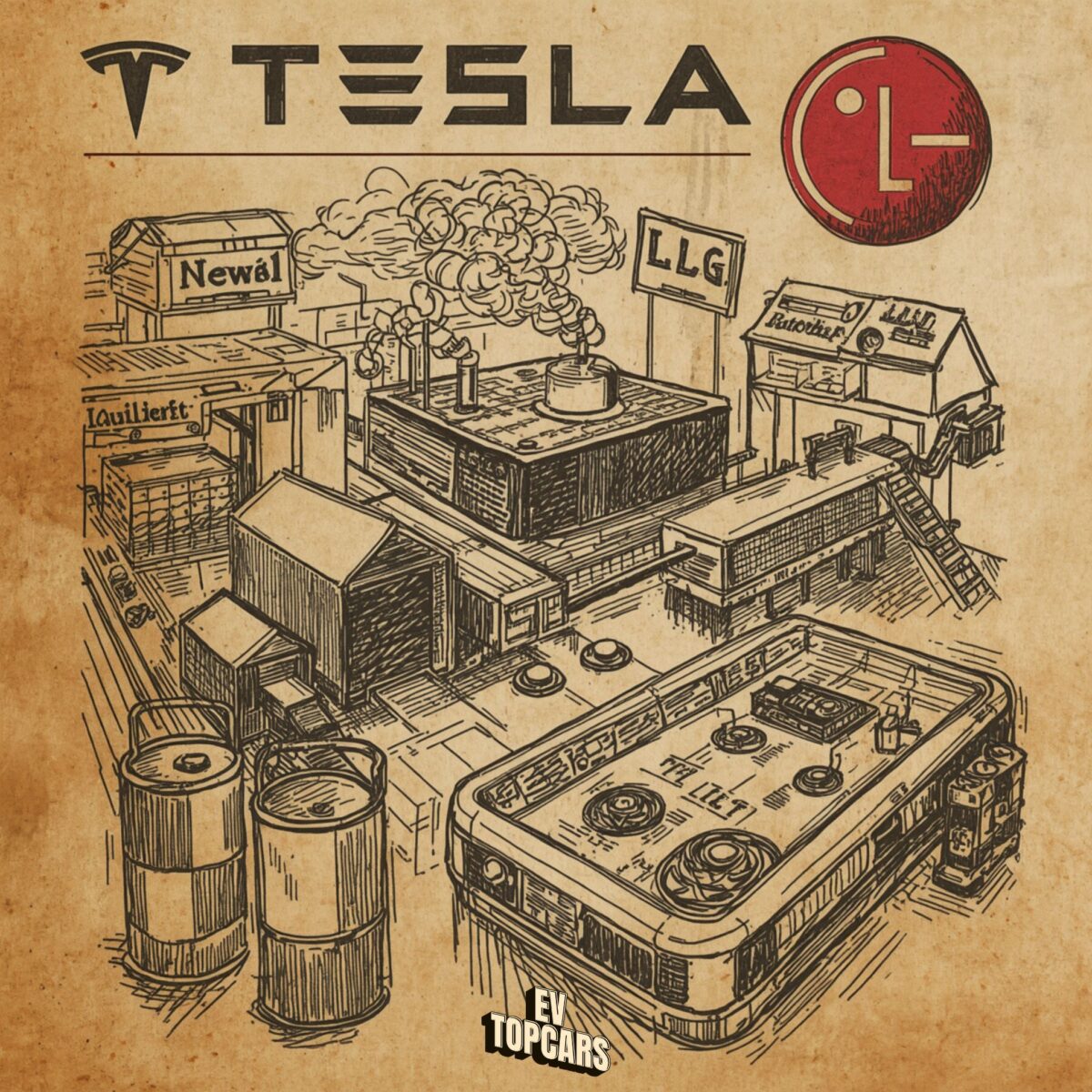
Tesla’s push to “onshore” its battery supply chain just hit a massive milestone in the Midwest. In a strategic move to decouple from Chinese-dominated LFP (lithium-iron-phosphate) supply chains, Tesla has officially teamed up with LG Energy Solution to scale LFP production in Holland, Michigan.
This partnership represents more than just a new factory; it’s a $4.3 billion commitment to securing the future of Tesla Energy. By localizing “Tesla-grade” LFP cells, the company is insulating its fastest-growing business segment from volatile international tariffs while tapping into significant U.S. clean-energy incentives.
Why LFP? The “Safety & Longevity” MVP
While nickel-based chemistries dominate high-performance EVs, LFP is the undisputed king of stationary storage. Tesla’s pivot to LFP for products like the Megapack 3, Powerwall, and Powerpack is driven by three core factors:
-
Thermal Stability: LFP is inherently safer and more resistant to “thermal runaway,” a critical requirement for utility-scale grid installations.
-
Cycle Life: These cells can handle thousands of charge/discharge cycles with minimal degradation, making them ideal for 20-year grid-balancing projects.
-
Affordability: By removing expensive cobalt and nickel from the equation, Tesla can continue to drive down the cost-per-kWh for renewable energy storage.
Michigan: The New “Battery Belt” Hub
The expansion at LG’s Holland, Michigan campus is part of a broader Michigan battery ecosystem. This facility will be a primary feeder for the Tesla Megafactory in Houston, Texas, where the next-generation Megapack 3 is assembled.
The move is also a savvy play for Inflation Reduction Act (IRA) credits. By manufacturing the cells domestically, Tesla and LG can claim substantial production tax credits, effectively lowering the cost of every Megapack that rolls off the line.
Strategic Diversification & The “Tariff Wall”
For years, Tesla has relied heavily on Chinese giants like CATL for LFP cells. However, with new U.S. tariffs on Chinese batteries reaching as high as 25%–80% depending on the specific trade climate, the “China-only” strategy became a financial liability.
“American-made cells will power Tesla’s Megapack 3… creating a robust domestic battery supply chain.” — U.S. Department of the Interior statement.
What This Means for the Future
As Tesla Energy continues to outpace the growth of its automotive wing, securing 50 GWh+ of domestic LFP capacity is a massive competitive moat. This Michigan plant ensures that even if global trade tensions escalate, the “Big Batteries” keeping our grids stable will be built with American-made technology.
For Tesla owners and investors, this is the “resiliency” phase of the master plan—moving from disrupting the grid to owning the infrastructure that supports it.





Texas Woman Sues Tesla: “My Cybertruck Thought the Concrete Barrier Was Just a Really Firm Hug”
Tesla in Norway: 53.4% Market Share in the First Week of March… The Other Brands Are Now Officially Selling Air Fresheners